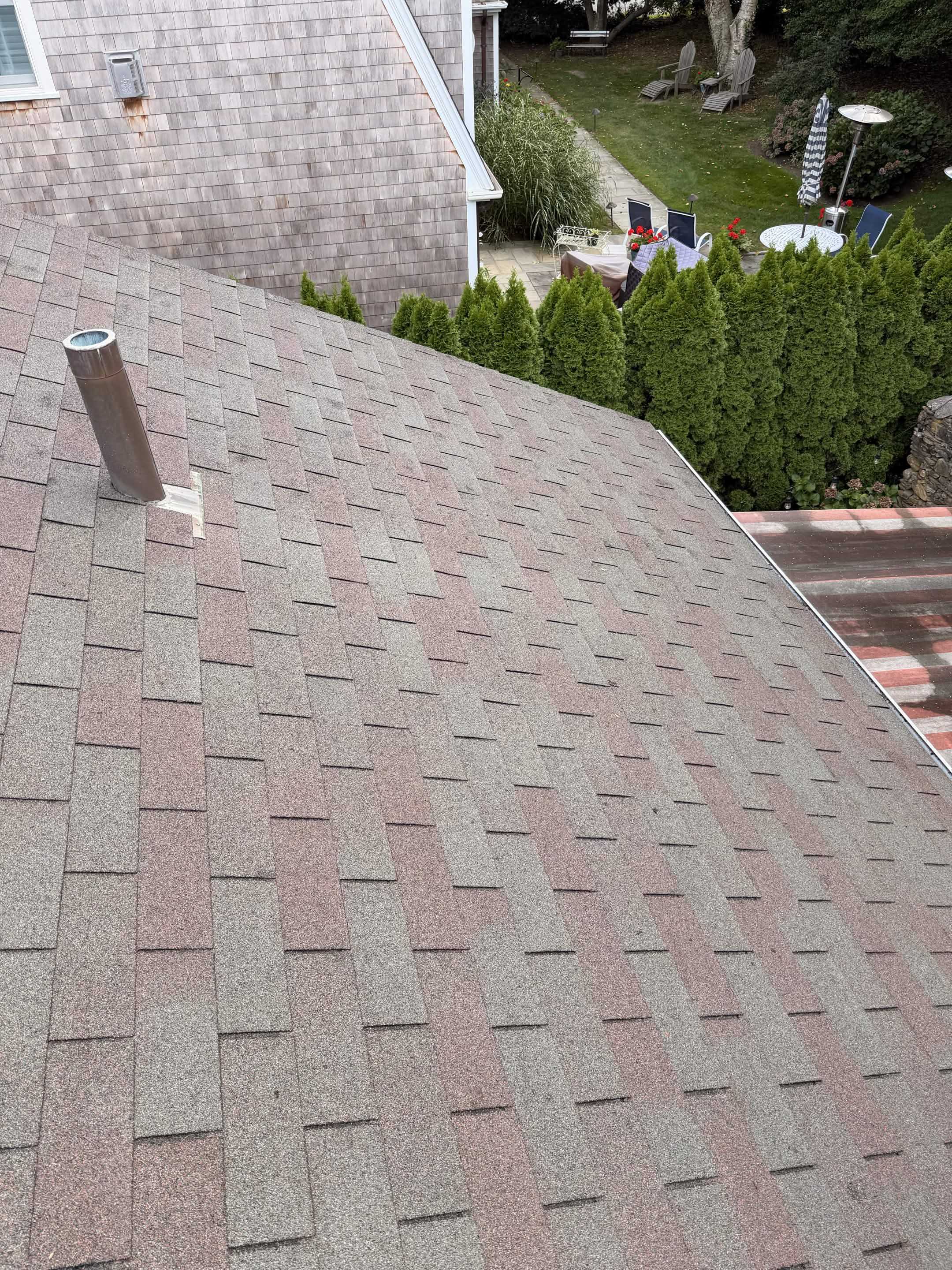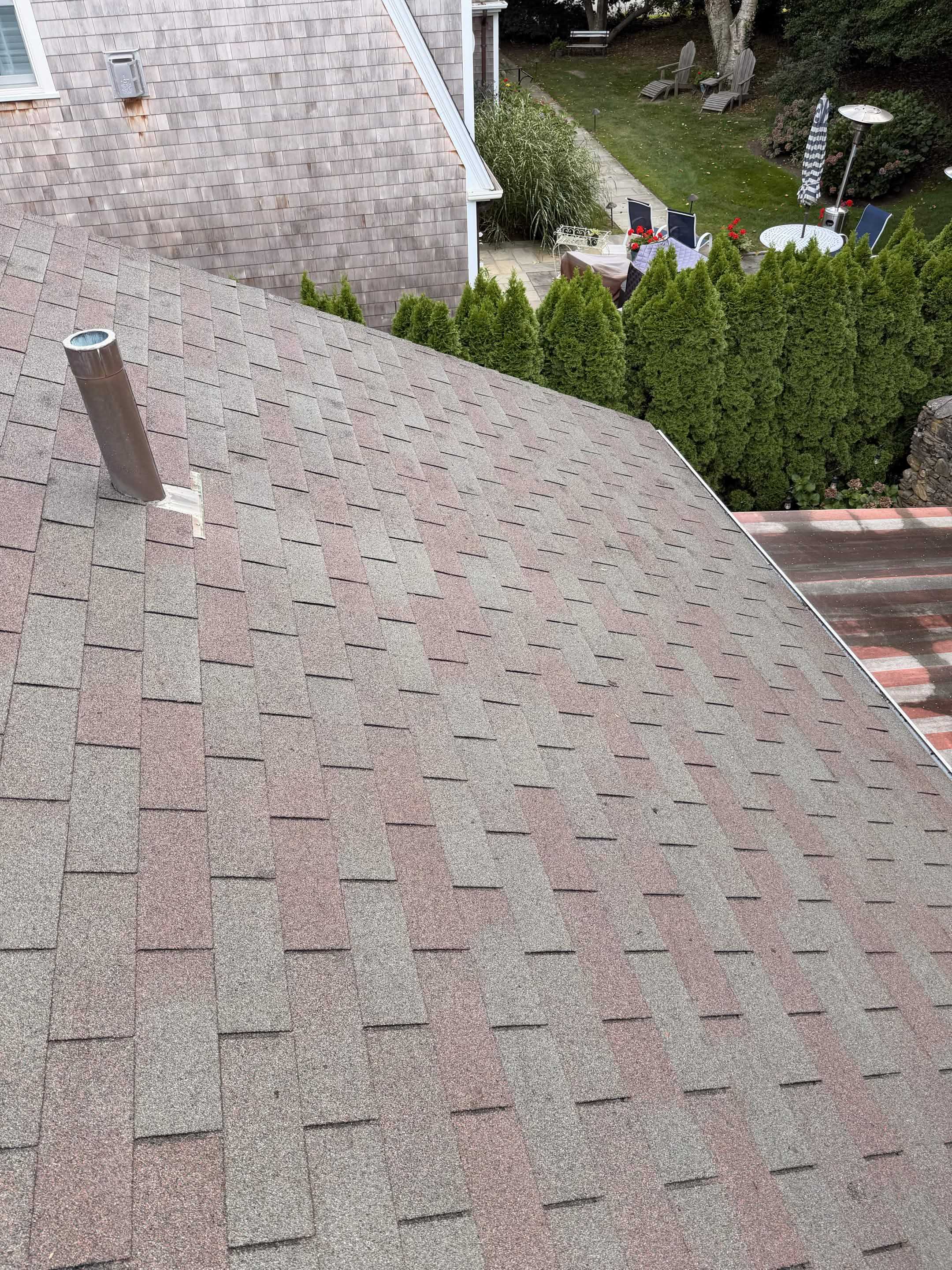
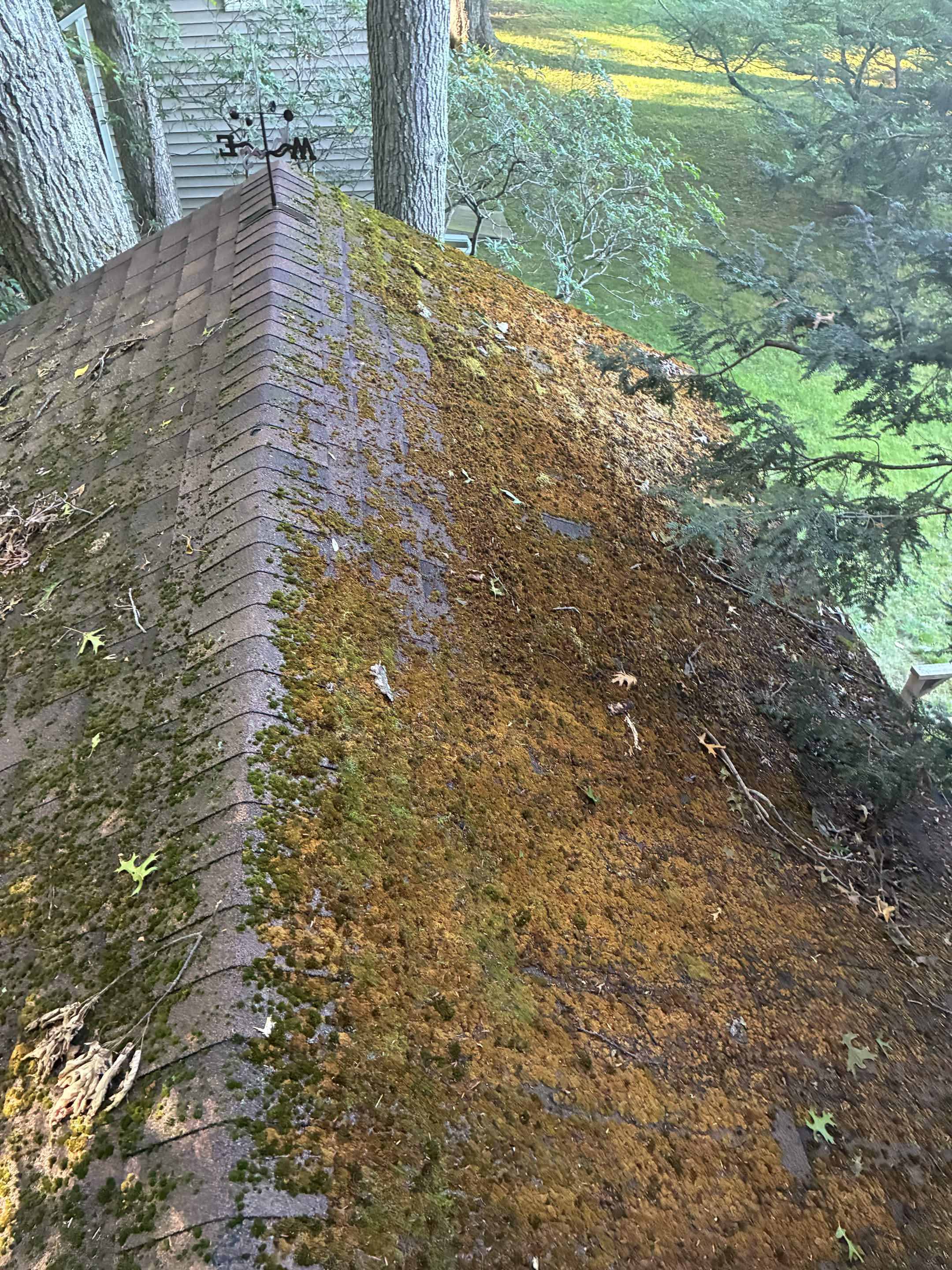
The dark streaks that run down many shingle roofs are typically algae, and the green, cushioned patches are moss. Both thrive in the conditions Connecticut provides in abundance: moisture, shade, and mild stretches between cold snaps. Roofs shaded by trees or facing north are especially susceptible.
Algae usually appears first. It spreads gradually, feeding on moisture and on the limestone filler found in many asphalt shingles, and it produces the dark staining that is often mistaken for dirt. In the early stages the effect is largely cosmetic, but algae retains moisture against the roof surface, which creates the conditions for more serious growth.
Moss deserves closer attention. It forms thick mats, particularly on shaded slopes and beneath overhanging branches, and its roots work their way beneath the edges of the shingles. Over time it can lift them and allow water to reach areas that should stay dry.
Moss and algae are easier and less expensive to address early. Waiting rarely makes them go away on their own.
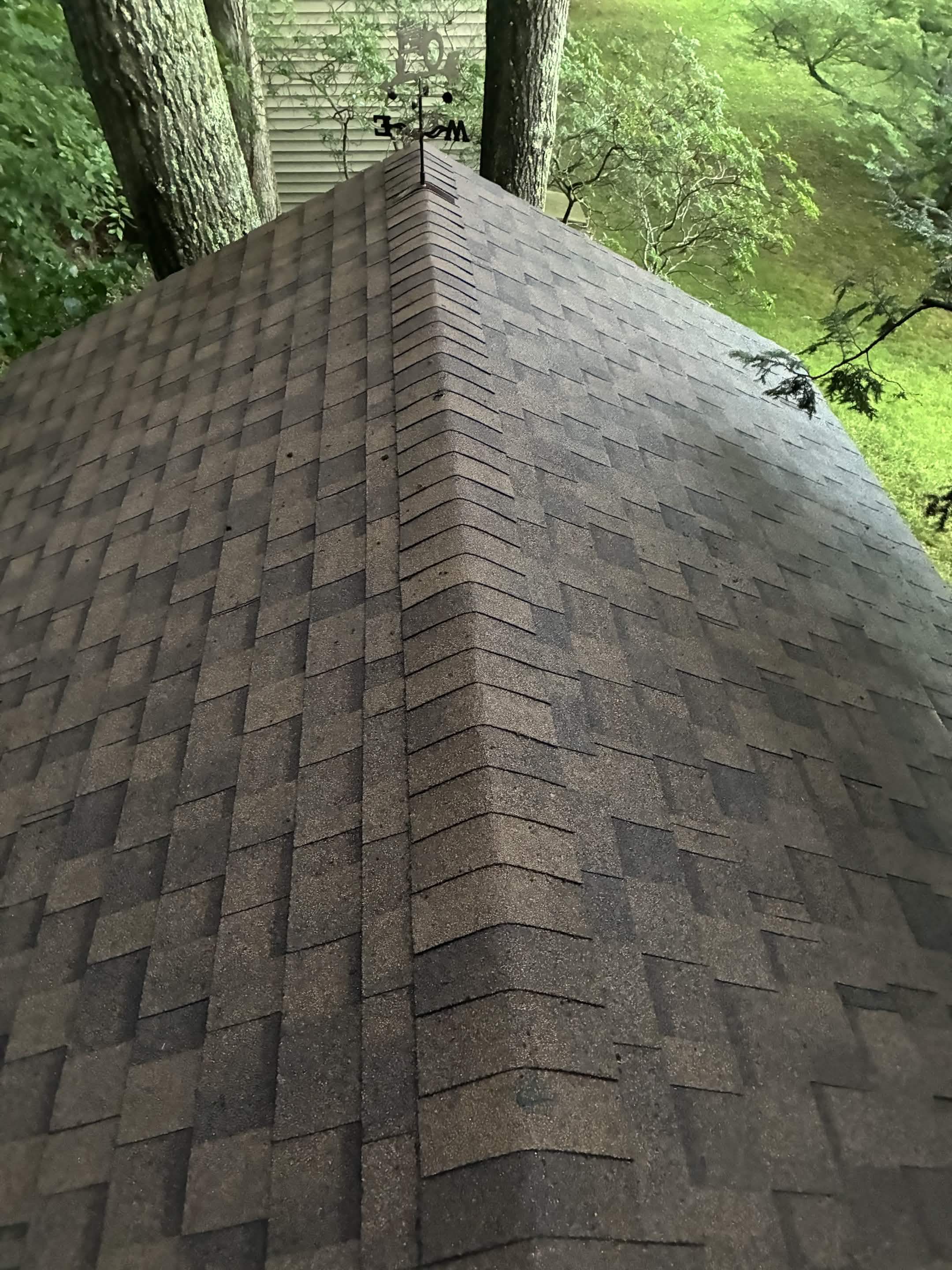
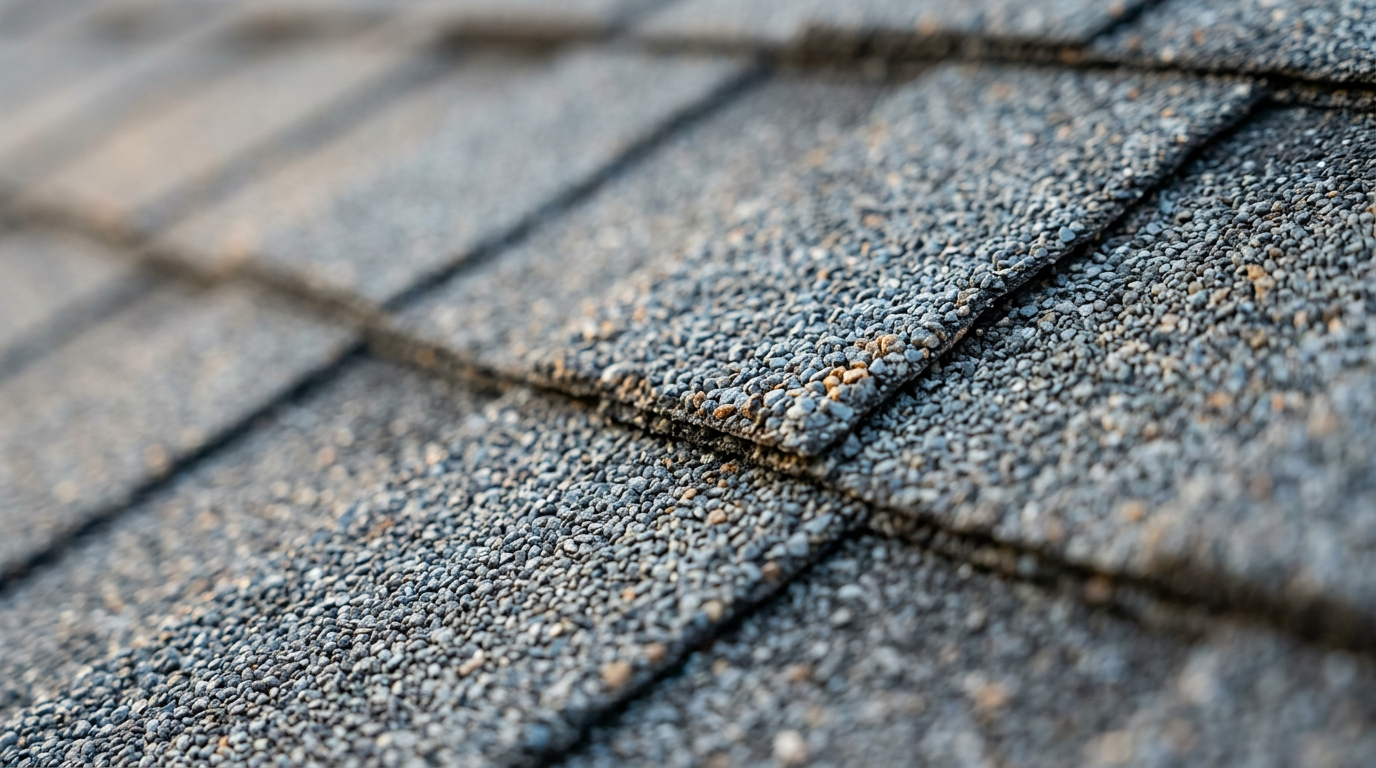
Homeowners are often tempted to use a pressure washer, but we advise against it. High pressure strips the protective granules from the shingles and can shorten the life of the roof you are trying to preserve. Working on a wet roof from a ladder also carries real safety risk. A low-pressure method with an appropriate cleaning solution removes the growth without damaging the surface.
A roof with moss and algae is very often a roof that can be saved. Cleaning it, then treating it so the growth does not quickly return, costs far less than replacement and can add meaningful service life to the roof you already have.
If you are unsure how advanced the growth is, we will inspect the roof at no charge. We will identify what is growing, assess whether the shingles underneath remain in good condition, and recommend the most cost-effective next step. You can request your free inspection using the form below.
Quick answers
Is moss on my roof an emergency?
Usually not, but it should be addressed sooner rather than later because it holds moisture and can lift shingles over time.
Can I pressure wash it myself?
We advise against it. High pressure can strip protective granules and damage shingles. Low-pressure cleaning is much safer for the roof.